

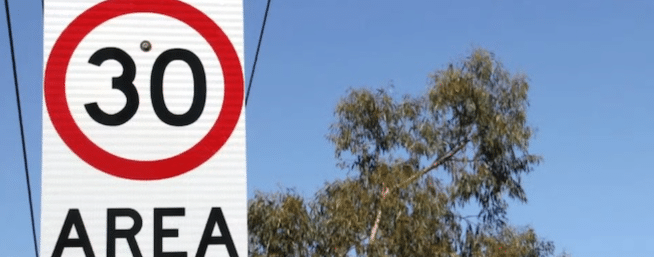
The gradual and inevitable move towards more liveable, people-friendly streets has taken a crucial step forward with the official introduction of 30km/h zones in Victoria.
Councils can now apply to the Department of Transport and Planning to impose the safer limit in contexts where it can deliver major benefits – places like downtown shopping districts, pedestrian-dense main streets and busy bike routes.
Although there are already some neighbourhoods that are signed 30, these in the main are trials that have been extended because of the lack of an official 30km/h category.
The most important benefit of slower speeds is the significantly lower burden of crash injuries resulting from collisions with motor vehicles, especially with the worrying recent rise in pedestrian fatalities and serious injuries.
But speeds of 30km/h and lower are also of great benefit to bike riders, with streets less risky, hectic and noisy, thus more attractive for bikes.
The smaller gap in speeds between the car and the bike rider makes for an appreciable difference in rider confidence and comfort.
And in the future, as rider numbers rise, there will be many low-traffic local streets that can be purposed as bike routes without heavy investment in dedicated infrastructure.
Bicycle Network has been arguing for lower limits for decades, but progress has been glacial. Politicians feared driver backlash, but now that 30km/h is widespread in many advanced cities, it is widely accepted by communities.
Slower streets encourage more people to be on them, doing more shopping, meeting more friends, riding their bikes for enjoyment and releasing their children from being cooped up inside.
And more cars are resting in the garage.
A significant advance with the new Victorian Speed Zoning Policy is the use of Movement and Place principles, the Victorian guidelines that assess the purpose and characteristics of a street, road or related place, and help determine the appropriate design and features, including speed limits.
This should result in less disputation of where and how 30km/h can be introduced, including school precincts.
Most councils will know where they need these zones, and there could well be a queue at the Department of Transport and Planning before long.
Or become our friend and subscribe to receive our fortnightly newsletter.