Although there is much uncertainty around the future regulation of e-bikes, this should not deter you from getting out your credit card this holiday season if you have recognised that this rapidly advancing, two-wheeled transport solution meets your needs.
Despite all the controversy over legality, battery fires and safety risks, Bicycle Network’s advice to you has not changed at all over the more than a decade that we have been promoting e-bikes as an emerging revolution in the way people travel.
- Ensure your purchase complies with EN 15194, the former and future standard for e-bikes across Australia.
- Choose a recognised, trusted bike brand that has invested in good design, quality materials and manufacture.
- Get it from a proper, reputable bike shop with trained staff, spare parts, and an understanding of your expectations.
Follow these three points and all the other issues that are plaguing owners, police, consumer affairs offices and energy safety regulators should stay out of your way.
The federal and state governments recently issued a communique which committed Australia to the EN 15194 standard for the future.
Note that there are many so called e-bikes in Australia, new and secondhand, probably numbering well over 100,000, that do not comply with this standard.
Mostly in New South Wales and Queensland, but with a smattering around the rest of the country, these machines are regarded by law enforcement as electric motorcycles, and you can be fined for not having a motorcycle licence or vehicle registration, and the wrong helmet.
The same goes for bikes that have been tampered with to give them more power output and speed: they are not regarded as compliant e-bikes.
Bikes fitted with after-market electrical power kits should also be avoided as not only are they not compliant with the standard, they are also usually fitted with high-powered motors that propel them at speeds beyond the safety capability of the host bicycle, not to mention the rider.
Now that our governments have re-committed to the EN 15194 standard, many of these dodgy machines could be popping up for sale soon, so be extra careful if you are looking for a used e-bike.
Even if the second-hand machine you are looking at is compliant, its battery or charger could be in need of costly replacement.
If you are considering buying an e-bike or e-scooter for a child, things are even more complicated, as in some states there are bans on the use of such devices for people under the age of 16. Furthermore, Bicycle Network is aware that authorities are so concerned over the wave of serious injuries and even deaths among children using these devices that a national ban across all states is a possibility.
You will have noticed too that many of these suspect e-bikes do not even have an adjustable seat, causing the riders to be ill-positioned for pedalling and safe balance.
And just as importantly, is an electric-assist bike or scooter really a good option for a growing child, who in today's environment is already lacking the degree of physical activity required for their healthy physical and intellectual development?
Questions to ask before you buy:
- Is this bike EU-compliant and certified to EN15194?
- Is the bike pedal-assist without use of a throttle grip?
- Is the motor wattage 250W or less?
- Does the motor stop assisting once the bike reaches 25km/h?
- Does the bike have a brand-name battery and matching charger?
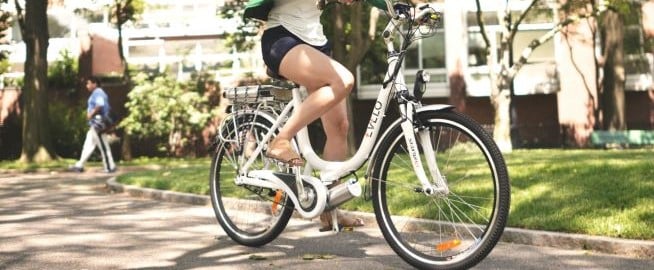
- Does the bike look and handle like a standard bicycle?
Read more in our guide to buying your child an e-bike for Christmas.
Or become our friend and subscribe to receive our fortnightly newsletter.