

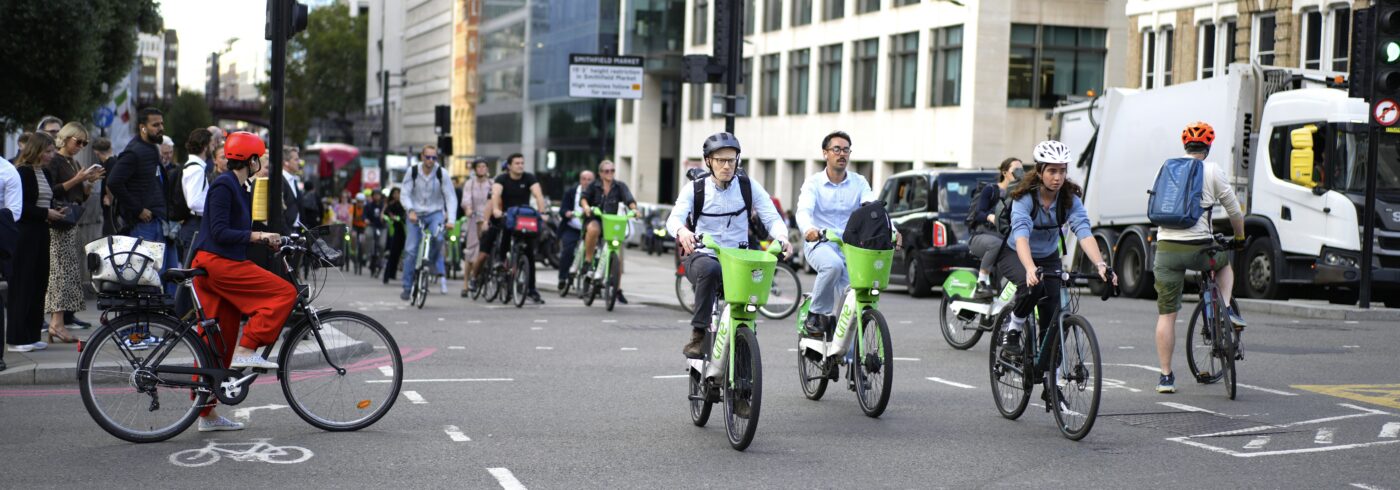
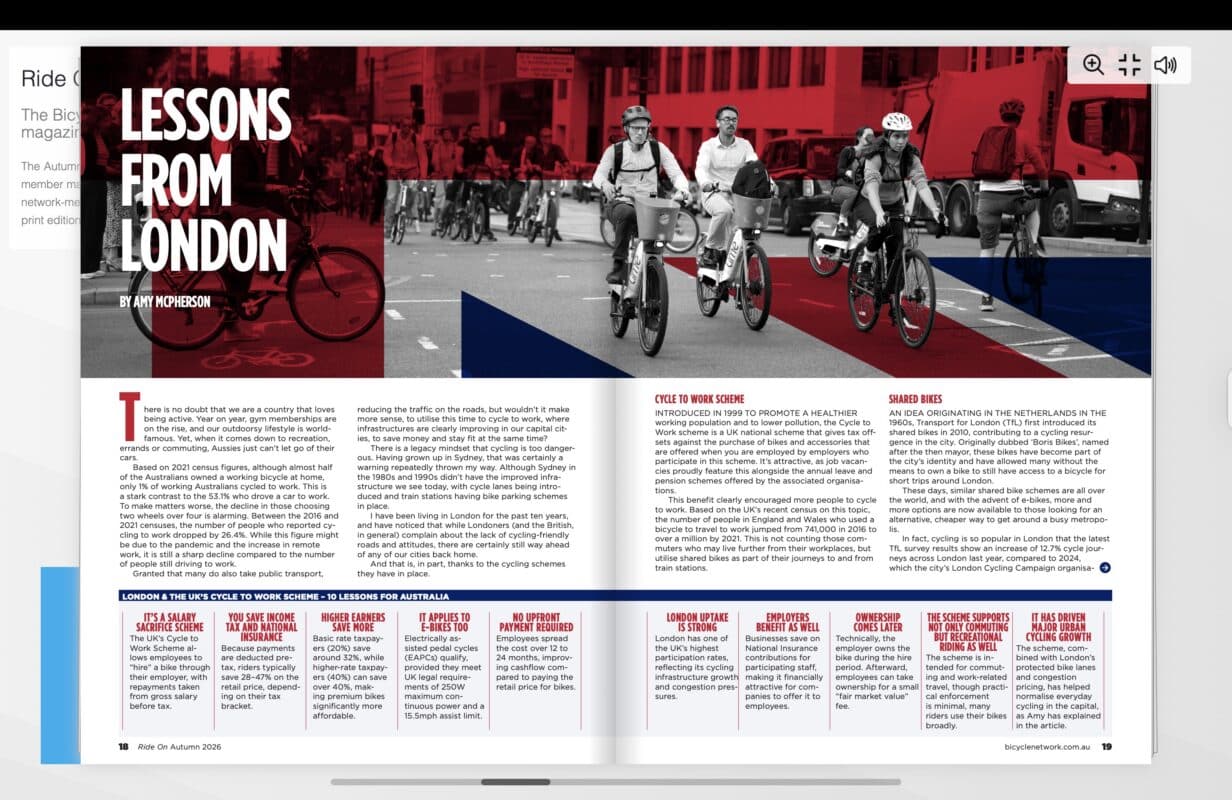
With the Winter edition of Bicycle Network's Ride On now at the printers and soon to be delivered, here we present an exclusive magazine feature - Lessons from London by Amy McPherson.
There is no doubt that we are a country that loves being active. Year on year, gym memberships are on the rise, and our outdoorsy lifestyle is world-famous. Yet, when it comes down to recreation, errands or commuting, Aussies just can’t let go of their cars.
Based on 2021 census figures, although almost half of the Australians owned a working bicycle at home, only 1% of working Australians cycled to work. This is a stark contrast to the 53.1% who drove a car to work. To make matters worse, the decline in those choosing two wheels over four is alarming.
Between the 2016 and 2021 censuses, the number of people who reported cycling to work dropped by 26.4%. While this figure may be due to the pandemic and the rise in remote work, it is still a sharp decline compared with the number of people who are still driving to work.
Granted that many do also take public transport, reducing the traffic on the roads, but wouldn’t it make more sense to utilise this time to cycle to work, where infrastructures are clearly improving in our capital cities, to save money and stay fit at the same time?
There is a legacy mindset that cycling is too dangerous. Having grown up in Sydney, I certainly found that warning repeatedly thrown my way. Although Sydney in the 1980s and 1990s didn’t have the improved infrastructure we see today, with cycle lanes being introduced and train stations having bike parking schemes in place.
Keen to subscribe and receive your own copy of Ride On magazine for just $30 per year? Sign up via this link.
I have been living in London for the past ten years, and have noticed that while Londoners (and the British, in general) complain about the lack of cycling-friendly roads and attitudes, there are certainly still way ahead of any of our cities back home.
And that is, in part, thanks to the cycling schemes they have in place.
Cycle to Work scheme
Introduced in 1999 to promote a healthier working population and to lower pollution, the Cycle to Work scheme is a UK national scheme that gives tax offsets against the purchase of bikes and accessories that are offered when you are employed by employers who participate in this scheme. It’s attractive, as job vacancies proudly feature this alongside the annual leave and pension schemes offered by the associated organisations.
This benefit clearly encouraged more people to cycle to work. Based on the UK’s recent census on this topic, the number of people in England and Wales who used a bicycle to travel to work jumped from 741,000 in 2016 to over a million by 2021. This is not counting those commuters who may live further from their workplaces, but utilise shared bikes as part of their journeys to and from train stations.
Shared Bikes
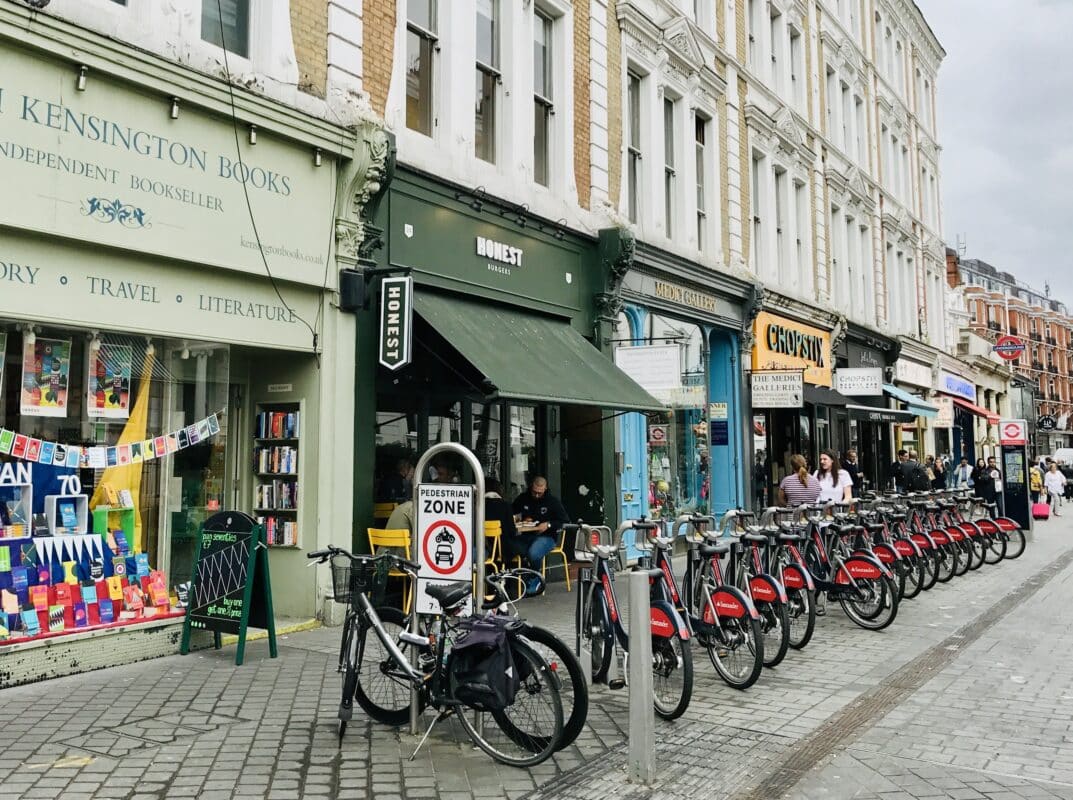
An idea originating in the Netherlands in the 1960s, Transport for London (TfL) first introduced its shared bikes in 2010, contributing to a cycling resurgence in the city. Originally dubbed ‘Boris Bikes’, named after the then mayor, these bikes have become part of the city’s identity and have allowed many without the means to own a bike to still have access to a bicycle for short trips around London.
These days, similar shared bike schemes are all over the world, and with the advent of e-bikes, more and more options are now available to those looking for an alternative, cheaper way to get around a busy metropolis.
In fact, cycling is so popular in London that the latest TfL survey results show an increase of 12.7% cycle journeys across London last year, compared to 2024, which the city’s London Cycling Campaign organisation believes can be attributed to the availability of dockless bikes as well as the city’s improvement in infrastructure. Unfortunately, this is not the case in Australian cities.
Although today’s headlines are often negative in regards to these shared bike users, whom are often not regular cyclists, without knowledge of road rules and are disliked by cyclists and non-cyclists alike, it does not take away the fact that the availability of these bikes have raised the profile of using a bicycle as a transport method in London and has been introduced in many other cities around the UK.
A dedicated campaigning body
London Cycling Campaign (LCC) is a campaigning body that champions cycling in the city. Although it’s not a national scheme, it works to make cycling safe and enjoyable for all in this city of almost ten million people.
The LCC petitions for the government to look at dangerous junctions, campaigns for a safer environment for cyclists, and the creation of low traffic neighbourhoods. It also acknowledges that cycle-friendliness is a two-way thing, and it also must come from within the communities themselves. The LCC reaches out to London's communities and creates social and friendly ways to encourage more people to bike.
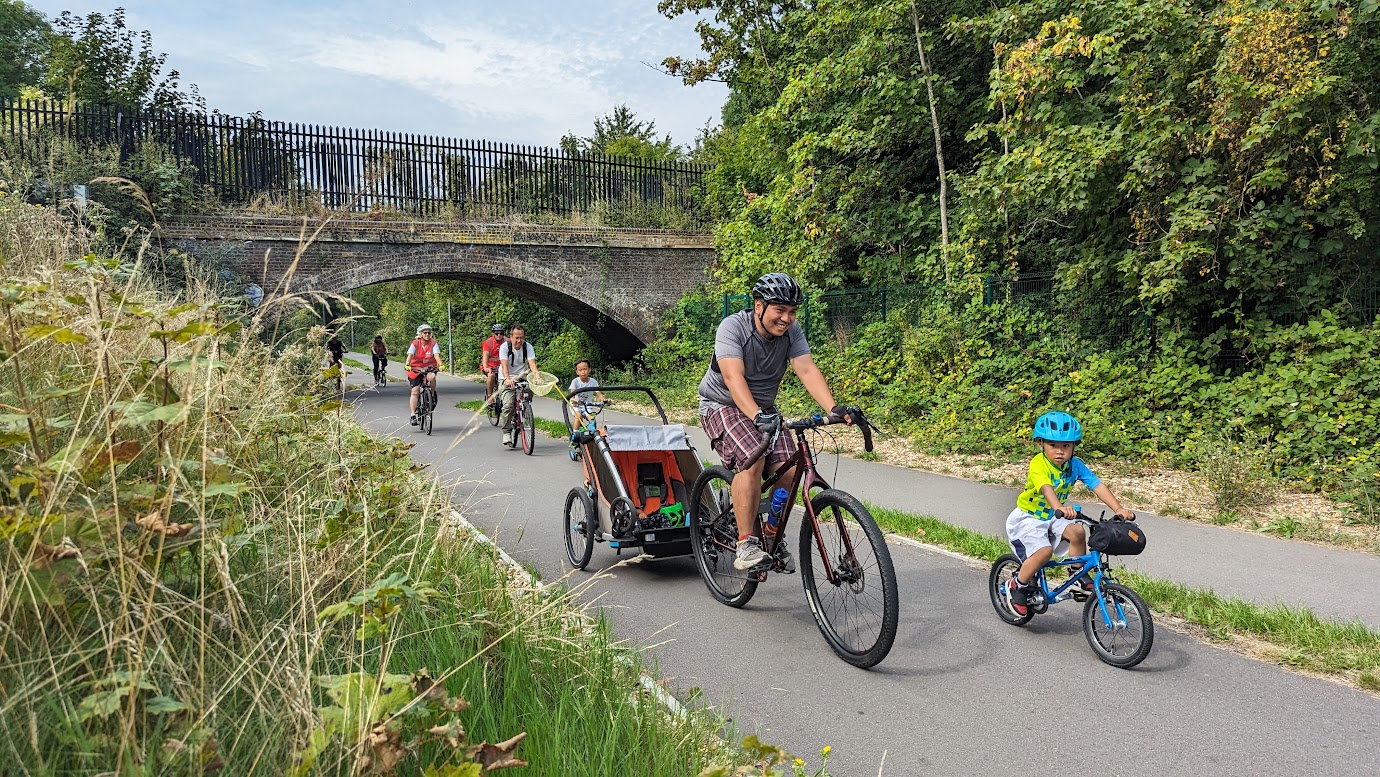
One of the most successful Boroughs where LCC has a large social engagement is Kingston upon Thames, where the Kingston branch of the LCC offers free social rides every second Sunday during the year to promote the cycling routes in the area as well as convince more people that cycling can be fun and safe.
Roger Mace has astonishingly led these rides for the past 25 years, and he believes they have created more cyclists in the area. Today, a ‘KCC ride’ attracts a dedicated group of cyclists who support and nurture newcomers to the group. A recent new joiner, name withheld, indicated that they joined the group out of curiosity, and, having been on the ride, understanding the roads and feeling safe in numbers, they would be happy to ride more on their normal days.
“In the early days, it might be just a group of 6 or 7, rarely it would go into double figures at the time. Now, of course, it's often 20 or more each ride,” Roger recalls. “I certainly would hope that our rides encourage people to use their bikes more!”
Large events engagement
The last time UK felt a major enthusiasm in cycling was after London hosted the Olympics in 2012 also generated major interest in cycling, especially in Surrey where the road cycling event was held (unsurprisingly, coming through Kingston!) which made Surrey and its iconic Box Hill a cycling destination, and the creation of the annual RideLondon sportive which followed the race route and became part of a larger London Cycling Festival event. Unfortunately, the future of this event is uncertain due to rising costs and the lack of sponsorship.
Then, Yorkshire hosted the Grand Depart of the 2014 Tour de France. The momentum from this world-class event surged forward the creation of England’s own Tour de Yorkshire in 2015, which was unfortunately cancelled in 2020 and never resurfaced.

What next?
Cycling in the UK has had its up and downs. While the statistics clearly show participation is on the up, it doesn’t mean the country didn’t experience its challenges. There are currently several anti-cycling movements in city planning that are rolling back years of work on cycling infrastructure, and education on respect and safer roads for all continues to face differing opinions. However, overall, I do feel that Australia can learn a lot from the UK, and of course, other parts of Europe.
These ideas are viable in any Australian city; there’s absolutely no reason why Australia can’t be a great cycling and pedestrian-friendly country.
Riding London Fast Facts
* Daily cycling journeys have surged 43% in six years, now reaching 1.5 million trips per day, according to Transport for London.
* Daily rides climbed from 1.05 million (2019) to 1.33 million (2024) and continue to rise.
* Almost 80% of surveyed riders said they feel safe on designated cycle routes, underscoring the impact of protected infrastructure.
* London’s Cycleway network now spans 430+ km, more than quadrupling since 2016.
* About 17 new routes have been added in the past year.
* Roughly 29% of Londoners live within 400 metres of a Cycleway, with a target of 40% by 2030.
* In parts of central London, bikes now outnumber cars during peak hours.
* Dockless e-bikes account for around 10% of daily cycling trips.
* The city’s public bike-hire system operates around 12,000 bikes across more than 800 docking stations, alongside tens of thousands of privately operated dockless bikes and e-bikes.
London & the UK’s Cycle to Work Scheme – 10 Lessons for Australia
1. It’s a salary sacrifice scheme
The UK’s Cycle to Work Scheme allows employees to “hire” a bike through their employer, with repayments taken from gross salary before tax.
2. You save Income Tax and National Insurance
Because payments are deducted pre-tax, riders typically save 28–47% on the retail price, depending on their tax bracket.
3. Higher earners save more
Basic rate taxpayers (20%) save around 32%, while higher-rate taxpayers (40%) can save over 40%, making premium bikes significantly more affordable.
4. It applies to e-bikes too
Electrically assisted pedal cycles (EAPCs) qualify, provided they meet UK legal requirements of 250W maximum continuous power and a 15.5mph assist limit.
5. No upfront payment required
Employees spread the cost over 12 to 24 months, improving cash flow compared to paying the retail price for bikes.
6. London uptake is strong
London has one of the UK’s highest participation rates, reflecting growth in its cycling infrastructure and congestion pressures.
7. Employers benefit as well
Businesses save on National Insurance contributions for participating staff, making it financially attractive for companies to offer it to employees.
8. Ownership comes later
Technically, the employer owns the bike during the hire period. Afterwards, employees can take ownership for a small “fair market value” fee.
9. The scheme supports not only commuting but recreational riding as well
The scheme is intended for commuting and work-related travel, though practical enforcement is minimal, many riders use their bikes broadly.
10. It has driven major urban cycling growth
The scheme, combined with London’s protected bike lanes and congestion pricing, has helped normalise everyday cycling in the capital, as Amy has explained in the article.
Keen to receive your own copy of Ride On magazine for just $30 per year? Sign up via this link and support Bicycle Network's member magazine.