

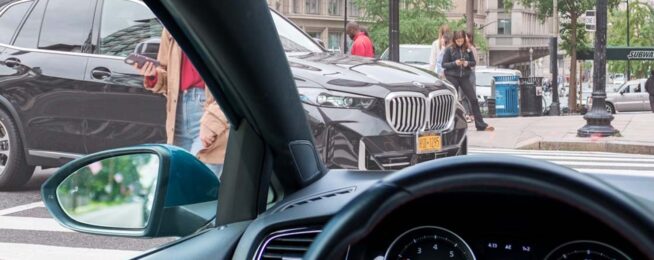
A new culprit is looming, just out of view, as the cause of the alarming recent rise in pedestrian injuries – bigger blind spots.
And if drivers are having trouble seeing people from their hulking SUVs and utes, then bike riders would be at increased risk too.
A new study led by researchers from the US Department of Transportation has found forward blind zones of six top-selling US passenger vehicles grew substantially over the past 25 years.
Over multiple redesign cycles from 1997 to 2023, forward visibility within a 10-metre radius fell as much as 58% for three popular SUVs, the researchers found.
In contrast, the early models of the two cars provided relatively good visibility that fell less than 8% in later generations.
The researchers were using a new technique developed by the Insurance Institute for Highway Safety (IIHS) to measure a driver’s direct area of vision around a vehicle.
The new IIHS method relies on computational software and a portable camera rig that can be positioned in the driver seat at various heights to represent different-sized drivers, no matter where the vehicle is located.
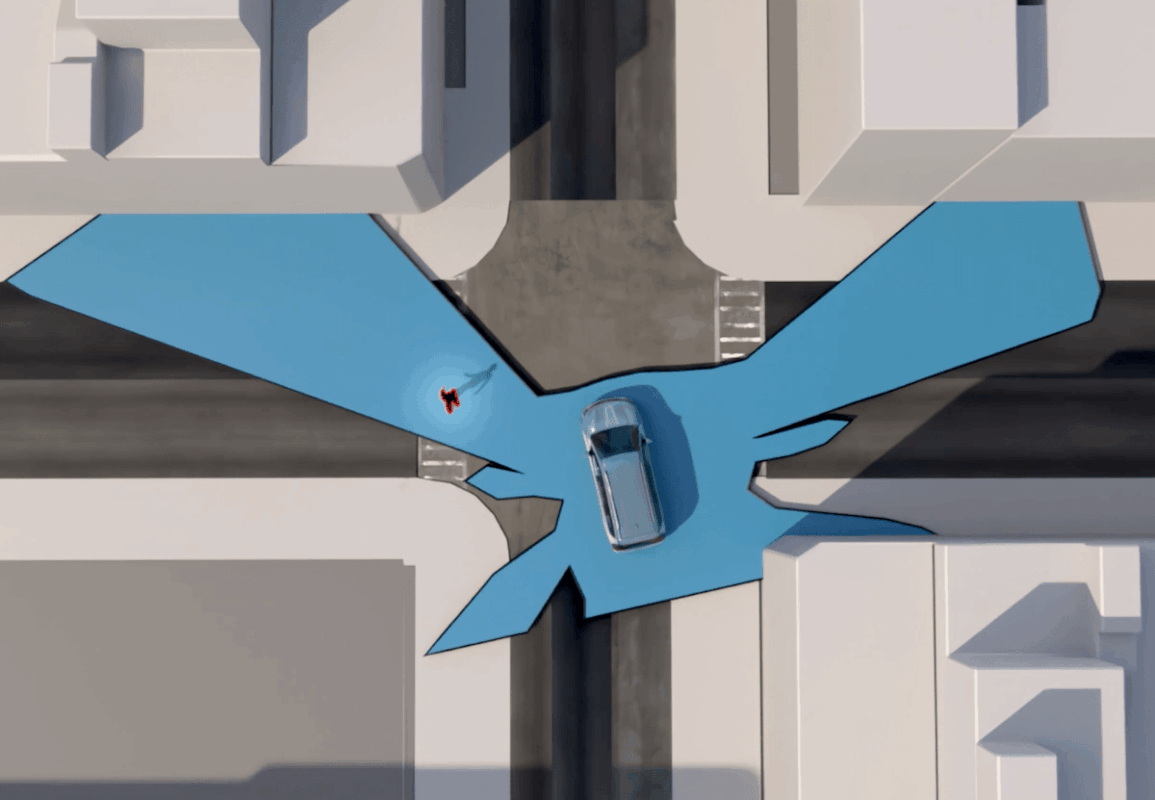
The camera rotates to take a 360-degree image of the field of vision around the vehicle with software, then converting that image into a blind zone map that depicts an aerial view of the vehicle and the nearest points on the ground that the driver can see.
It also provides a numerical value for the percentage of the area around the vehicle that is visible.
The technique promises to enable much broader studies of the role that vehicle design plays in driver visibility and crash risk.
“The across-the-board decrease in visibility for this small group of models is concerning,” IIHS President David Harkey said.
"We need to investigate whether this is a broader trend that may have contributed to the recent spike in pedestrian and bicyclist fatalities.”
The researchers used the new technique to examine how the designs of the Chevrolet Suburban, Ford F-150, Honda Accord, Honda CR-V, Jeep Grand Cherokee and Toyota Camry changed over model years 1997 to 2023 – an effort that required blind zone maps of 17 individual vehicles, representing each major redesign of the six study vehicles.
That 25-year period is of interest because pedestrian and bicyclist fatalities on US roads have soared 37% and 42% respectively over that time span.
Significant factors in the level of decreased visibility were the height of the bonnet and the size of the A-pillar and external mirrors.
IIHS Senior Research Engineer Becky Mueller, who led the development of the new mapping technique and is a co-author of the study, said that if further research confirmed that these changes reflect a general change, that would suggest that declining visibility in SUVs has compounded the effects of taller, blunt-nosed vehicles that has already been documented.
Or become our friend and subscribe to receive our fortnightly newsletter.