

New vehicle safety developments in Europe to be introduced this year could find their way to Australia soon and reduce the risks to riders on our roads.
EuroNCAP is the agency that evaluates vehicle safety in Europe, and many of the advances that have come out of its labs are now part of ANCAP, the Australian testing agency.
Once focused just on safety for those in a car involved in a collision, these crash standards now apply to those road users outside of the car, such as bike riders.
And rather than just improve the outcome of vehicle occupants, the aim is now to prevent the collisions in the first place.
This year EuroNCAP makes the biggest change to its evaluation processes since 2007.
The new system will assess vehicles across four stages of safety: safe driving, crash avoidance, crash protection and post-crash safety.
There will be greater emphasis on driver monitoring systems, awarding points for technology such as eye and head tracking and systems that adjust driver assistance based on the driver’s state.
Additional credits will be given to features that detect alcohol or drug impairment or have the ability to stop the vehicle if the driver becomes unresponsive.
Under the new testing regime, crash avoidance systems – such as autonomous emergency braking and lane support – will be verified to reflect real-life scenarios involving pedestrians, bike riders and motorbikes.
In recent years there has been criticism of driver assist technologies because drivers found it annoying.
Now such technologies will be evaluated not only on their crash-prevention abilities on the test track, but also during real-world driving, with the aim of improving consumer acceptance.
New, expanded test scenarios are introduced to improve the robustness of crash-prevention systems, particularly in conditions that are more representative of real-world environments.
Euro NCAP will expand the crash avoidance scenarios to reflect real-world accident patterns, including urban situations where vehicles routinely encounter powered two-wheelers, bike riders and pedestrians.
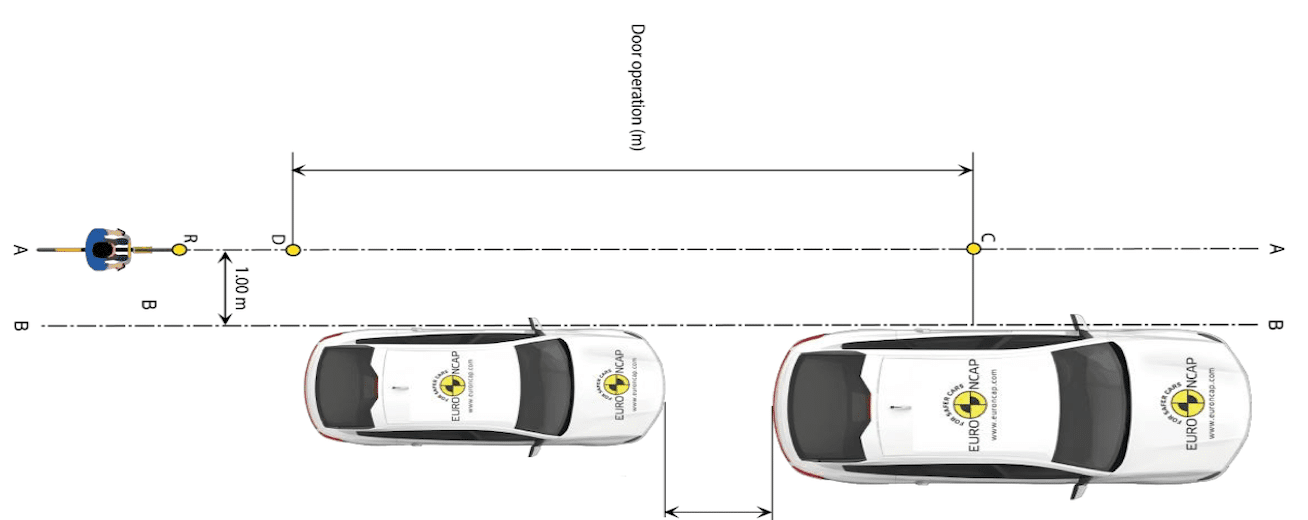
There will be new low-speed collision protocols that will specifically include the dooring of riders.
Or become our friend and subscribe to receive our fortnightly newsletter.