
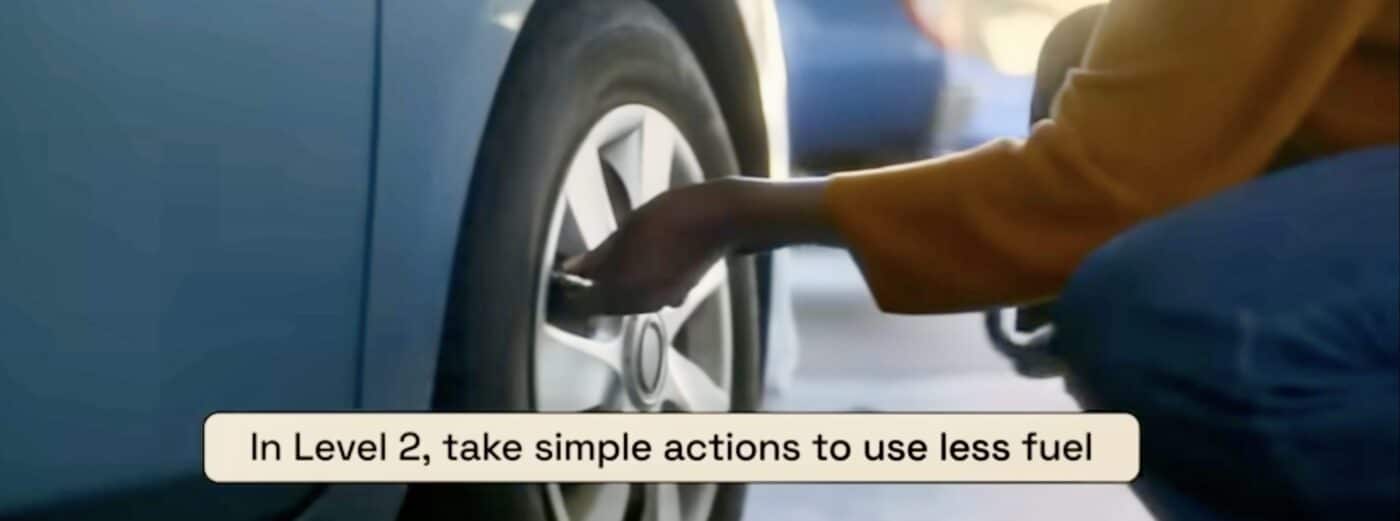
The head of the International Energy Agency tells us the world is in the grip of its most significant oil crisis ever, the IMF warns of a global recession, one of the nation’s two oil refineries has gone up in flames, and the Federal Government has spent $20 million on ad campaign telling us to pump up car tyres and remove our roof racks.
The ad explains that Australia is now at Level Two of the ‘National Fuel Security Plan’, and if you blinked during the slick 30-second slot that’s airing around the nation, you missed the simple answer to the major global conundrum.
At the 15-second mark, right in the middle of the voiceover explaining shared national responsibilities, a commuter pushes a bike toward a railway platform. Around .8 of a second passes, and a second cyclist jogs alongside their bike, and then — just like that — we’re back to tyre gauges and fuel bowsers.
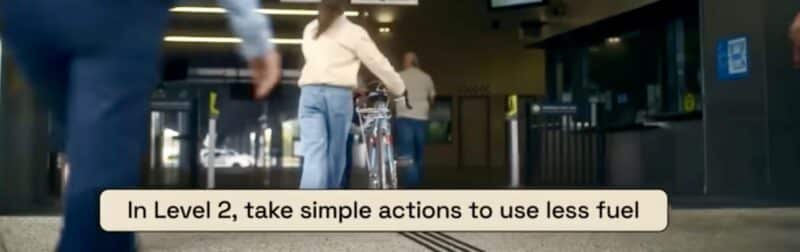
One and a half seconds, when bikes are central to the solution.
The ad aside, the federal government is also currently subsidising petrol by 26 cents a litre for three months — a $1.5 billion handout that WestCycle is tracking in real time with an online counter ticking over at an eye-watering $16 million a day.
Run those numbers against the cost of cycling infrastructure, and we're talking thousands of kilometres of pop-up bike lanes and paved paths. Instead, we get 1.5 seconds of blurred bike riders on foot and rushing for the train.
None of this should be surprising to anyone who remembers the twin oil shocks of the 1970s, when bicycles became the most visible symbol of energy independence across the Western world.
Fuel rationing and soaring petrol prices prompted people to consider bikes as a genuine commuting alternative, and some places thrived as a result. Here in Australia, car culture mainly prevailed, as many 70’s and 80’s Pedal Power front covers proved.
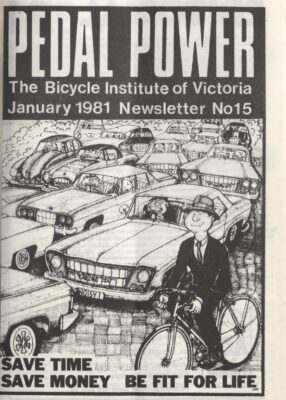
Fifty years on, it seems the more things change, the more they stay the same.
Cycling, infrastructure, and advocacy are the answer, and maybe even a proactive Federal government introducing cycling incentives.
Millions in ads, billions to subsidise fuel, when the answer is simply the bicycle.
Not a member? Join Bicycle Network today.
Join Now