
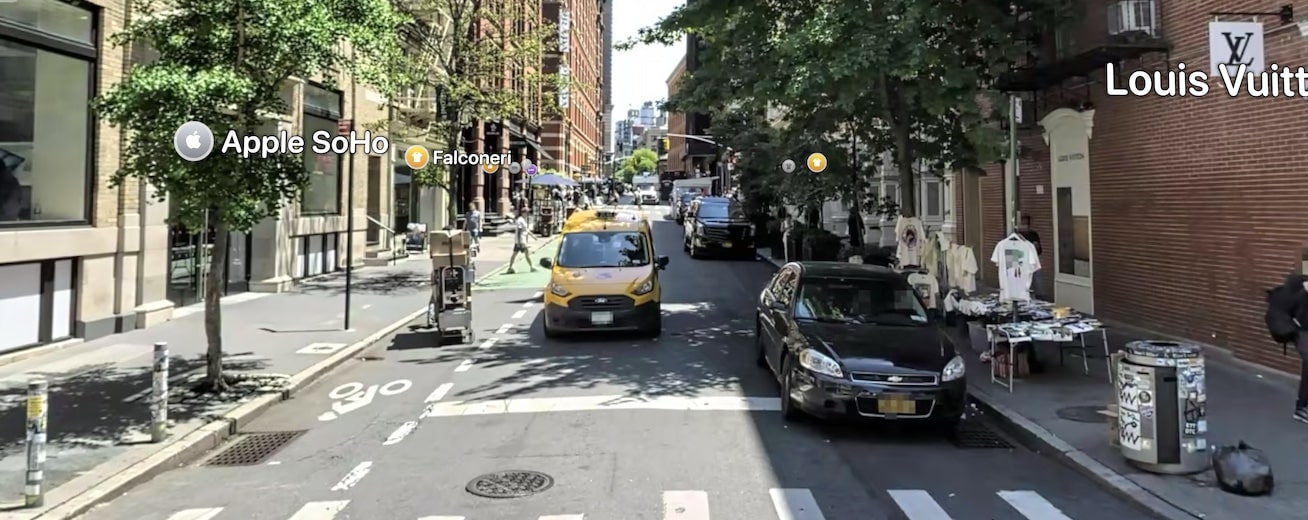
Around the globe city managers are making a new, critically important discovery about the operation of their downtown environments: the most valuable real estate is the kerb.
Rather than being at the edge, the kerb is at the centre of street operations.
It is where movement meets place, where public transport meets the footpath, where goods meet businesses and where customers depart with products.
And it is where people on bikes best make their journeys, unless car parking is in the way.
Now, in a world first, New York City has created an Office of Curb Management to better manage this most valuable space.
(Note: Yes that’s how Americans spell kerb. Something should be done to curb that habit.)
Mayor Zohran Mamdani has announced the creation of a new Office of Curb Management within the NYC Department of Transport to modernise how the city uses kerb space and “bring greater order and ease to New York City streets”.
“How we manage our curbs is how we show our streets are for everyone — from cyclists and drivers to sanitation workers and delivery workers to food vendors and outdoor diners,” said Mayor Mamdani.
“This new office will centralise planning so that our curbs can keep up with the new and growing ways New Yorkers enjoy our city. By modernising curb management, we're delivering a streetscape that is the envy of the world.”
The new office will oversee kerb policies across the city’s 6,300 miles of streets and roughly 3 million kerbside parking spaces, with a focus on improving safety, reducing double parking and better managing competing demands — from deliveries and outdoor dining to bike parking and waste containerisation.
The office will also streamline interagency coordination on projects requiring kerb management.
“As our streets continue to evolve — from better bike infrastructure to growing demand for outdoor dining — the way we manage our limited curb space is critical,” said Deputy Mayor for Operations Julia Kerson.
“Our curbs are more than just where our sidewalks meet the street, they are a reflection of how we want our streets to be used — streets that need to work for all New Yorkers.”
The city authorities want to bring a modern approach to utilising kerb space to meet a wider range of public needs, including multi-modal transportation options, loading zones, microhubs, vehicle pick-up and drop-off zones, secure bike parking and outdoor dining.
Australia’s local councils need also to realise that kerb space is far too valuable to use for the parking of private motor vehicles.
Or become our friend and subscribe to receive our fortnightly newsletter.