

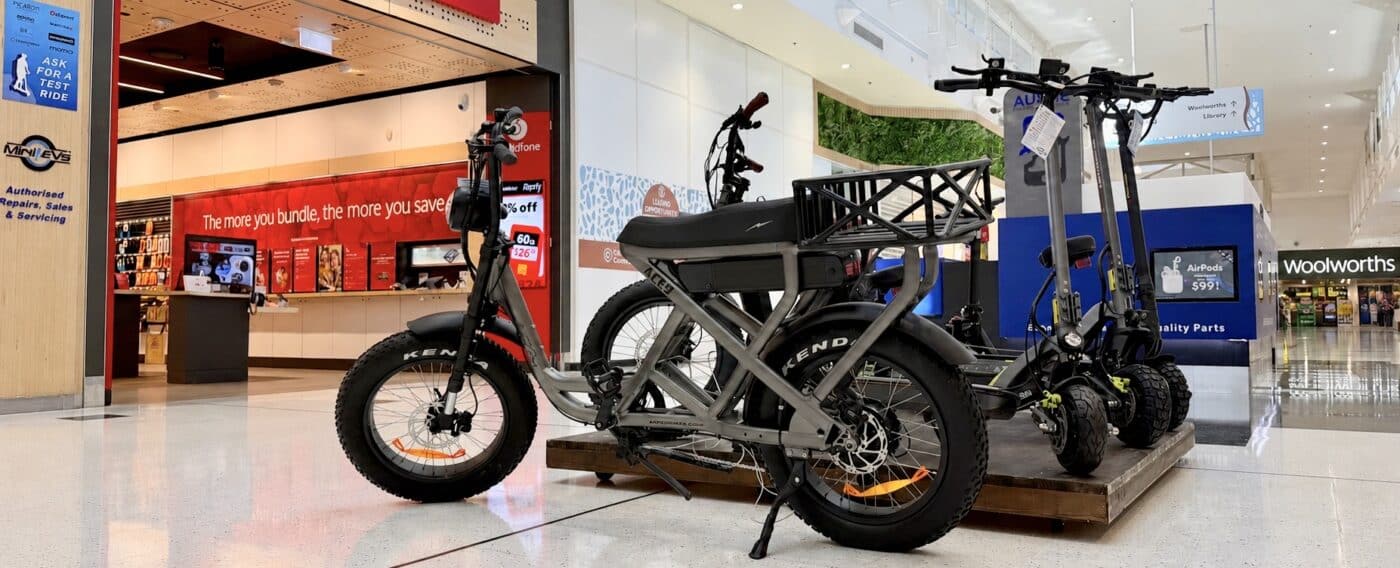
The Brisbane City Council has released a comprehensive response to the Queensland Government's e-mobility legislation. The Council, led by Mayor Adrian Schrinner, warns that several of the proposed measures would derail progress on sustainable mobility, and say compliant riders are not the source of safety concerns.
While Council backs sensible reforms, including standardising the definition of an e-bike with EN15194, reinstating the 25km/h speed cap for personal mobility devices, drink-riding provisions, hooning offences, and expanded police-evasion powers - its response zeroes in on the Bill’s numerous regressive elements.
Chief among the Council's concerns is the proposed blanket licensing and minimum-age requirements for e-bike users. Council argues that licensing would deter young riders, tourists, and people with disabilities who rely on e-devices for mobility.
Citing the National Walking and Cycling Participation Survey, which shows youth riding rates already halving, Council says additional barriers will further erode sustainable travel habits at a critical age. The response also says shared schemes would be unfairly constrained.
The Brisbane City Council opposes lowering footpath speed limits to 10km/h, noting Queensland University of Technology research that found 10km/h “presented challenges with respect to balance.”
Council reiterates that active transport is critical to managing congestion in Brisbane's road network, and urges the State to invest in dedicated infrastructure rather than restrict access.
The full BCC response too the report is -
Brisbane City Council Response to Transport and Other Legislation (Managing E-
Mobility Use and Protecting Our Communities) Amendment Bill 2026
Definition of an electrically power-assisted cycle
Council supports the amendment of the Transport Operations (Road Use Management) Act 1995
(TORUM) and the Transport Operations (Road Use Management – Road Rules) Regulation 2009
(Queensland Road Rules) to use the term ““electrically power assisted cycle” (EPAC), as it standardises the definition and aligns it with EN15194. However, it should be noted that EN15194 is regularly updated (for example with additional anti-tampering and battery safety provisions) and not all devices, that are otherwise compliant, may comply with the latest version of EN15194.
A blanket requirement to ensure that all devices (no matter when purchased) have a label that certifies that the device is compliant to the EPAC standard is considered onerous on existing owners as they would need to locate qualified certifiers at their cost. It is recommended that a program be facilitated by the Queensland Government to provide a free (or low-cost) service to assist retailers and existing device owners to have their devices assessed and obtain compliance labels.
Consideration should be given to a ‘buy-back’ scheme, or extended amnesty, for owners of devices that are not compatible with the new requirements where they are voluntarily surrendered.
It is recommended that no retrospective requirement be imposed to fit compliance plates to PMDs or e‑bikes owned by shared operators, where such plates are not already present, provided the operator can satisfy the Queensland Government that the devices otherwise comply with the requirements for a compliance plate.
A suitable timeframe for industry adoption of compliance plates should be allowed for in consultation with shared scheme operators Australia-wide and their suppliers.
Definition of personal mobility device
Council supports the amendment of Section 15A of the Queensland Road Rules to reinstate a maximum design speed of 25 km/h for PMDs.
Council has been made aware of the research undertaken by the Department of Transport and Main Roads (TMR) on modifying the dimensional criteria and supports modification to reflect the evolution of PMD design for greater safety.
Council does not consider it practical for existing devices to be limited to the new 25km/h design speed threshold, even with a six-month transition period. A more practical solution is to keep the general speed limit criteria in Section 24B (1) (d) of the Queensland Road Rules and possibly remove it at a later date.
Prohibited bike framework
Council supports clarity in the definition of a prohibited bike but suggests a more comprehensive approach is to define a compliant device as one that has been inspected, complies with Australian
Design Rules and is certified.
Licensing and age requirements for e-mobility devices
Council has concerns with the proposed blanket licensing and age requirements for e-mobility devices. The intent of the proposed legislation is to address non-compliant e-mobility devices being used dangerously in public areas, particularly by underage people.
The current legislation specifies a minimum age of 16 (12 under adult supervision) for riders of PMDs.
There is no minimum age for EPACs. This is appropriate given the higher level of risk associated with PMDs. There is no evidence that an EPAC carries a higher risk than a conventional bicycle. The current legislation is considered to be adequate.
The proposal to require licencing for all people using PMDs and EPACs provides a disincentive to young riders (even if they are using compliant devices) and has practical difficulties in its implementation.
Council’s Transport Plan for Brisbane – Strategic Directions identifies riding as important to reducing reliance on private vehicles as a way of minimising impacts on the environment. Low emission and electric vehicles improve the amenity of the city and help mitigate environmental impact. Further, more active lifestyles improve the health and wellbeing of our community reducing the impacts on our health systems. Getting more people to ride and walk is critical for an urban city with a mature road network. Active transport is an effective and efficient use of public space and allocation for that purpose is important in managing congestion.
E-devices also provide a great opportunity for first and last mile travel to and from public transport hubs effectively extending the reach of public transport services. As they increase the range of a standard bicycle, they provide an affordable transport option attractive to young people.
The National Walking and Cycling Participation Survey1 found that the current trend is a reduction from peak riding in young children (5-9 years) to half the rate in youth (10-17 years). Additional barriers like licensing are not expected to encourage this age group to take up riding and to create sustainable travel habits as young adults. TMR research2 has also shown that young people are delaying driving. Bike riding would be one of the various options that would allow them to maintain mobility for work and education. The licence requirement for an e-bike would disadvantage this group.
Council’s submission to the State Development, Infrastructure and Works Committee Inquiry into e- mobility safety and use in Queensland highlighted the benefits of e-mobility to the tourism experience and overall spend.
The imposition of a licence would deter tourists from using these devices, particularly as there are no requirements in many other jurisdictions. E-mobility devices can increase autonomy and agency for people with health impairments or disabilities who may be excluded from getting a driver’s licence but are still able to safely ride a bike or scooter.
The current Queensland driver’s licensing application and testing system, including learner’s permits that would be applicable to the overwhelming majority of EPAC and PMD users under the age of 16, could be perceived as being primarily focused on the operation of motor vehicles on the road. While it is acknowledged that the education and testing regime for licences of this type will provide successful applicants with basic road rule knowledge it is not considered that this will provide any improved awareness relating to the safe operations of an EPAC or PMD on footpaths or shared paths where the primary issues relating to interacting safely with pedestrians are occurring.
If a licensing requirement is to be introduced it is suggested that the current education and testing regime would need to be reviewed and substantially altered to provide a level of education and awareness for licence holders of the road rules and relating to the operation of EPAC and PMD, practically in relation to safe operation on footpaths and shared pathways, and the different speed limits that may apply when using various forms of transport infrastructure.
However, a targeted educational campaign starting at ages less than 16 would be greatly beneficial.
Parental responsibility framework
Council has no comment on the intent but notes that it diverges from the objective of TORUM which is to provide for the effective and efficient management of road use in the State (Section 3 (a)). It is incongruous that a parental responsibility is placed in TORUM and only in the context of some devices(i.e. it does not include vehicle offences).
Obligations for shared scheme providers in relation to age and licence
Council has concerns with the proposed amendment, noting that shared e-bike and PMD schemes frequently act as an entry point for new riders, particularly unlicensed individuals, including adults who have never held a driver licence. Licensing requirements would effectively exclude these cohorts from shared schemes and constrain the transition away from car dependency, which is an objective shared by all levels of government.
Currently, rider identification and age verification (with a minimum age of 16, for both shared scheme operators in Brisbane) is managed through rider declarations accepted during account registration.
Onboarding processes require riders to acknowledge relevant road rules and respond to mandatory questions before accessing a shared device. The proposed legislation may require additional compliance checks by shared scheme operators, without providing a clear definition of what constitutes “reasonable steps” under section 76C(1).
If reliance on declarations does not meet the “reasonable steps” requirement, operators would be required to redesign onboarding processes, including applications, identity verification, declarations and audit arrangements prior to 1 January 2027. This would impose a substantial administrative burden on the shared scheme operators and increase costs, including those associated with the collection and management of personal data.
PMD road access
Council does not support the simplification of the Queensland Road Rules to allow PMDs to be ridden on any road with a speed limit of 60km/h or less. This would result in an increased differential travel speed between PMDs traveling at the maximum permitted design speed of 25km/h and other motor vehicles traveling up to the permitted speed limit of 60km/h in free flow traffic conditions, resulting in increased safety risks to vulnerable road users.
However, Council would support the removal of the provisions requiring PMDs not to be ridden on:
• roads with a dividing line or median strip
• a one-way road with more than one marked lane
This would provide greater access to streets in urban areas with a speed limit of 50km/h or below, allowing PMD users to choose to travel on streets that could not currently be lawfully used. The presence of PMD users on these streets would then be considered as part of any future speed management considerations, including potential lower speed limits to support increased active transport usage.
Footpath speed limits
Council is concerned with the intent that by lowering speed limits on footpaths this will incentivise increased riding on-road by PMDs and EPACs, even where there is no dedicated or separated infrastructure provision for them. The more restrictions placed on usage of footpaths and shared paths, the greater the need for investment in dedicated infrastructure for wheeled micromobility.
The objective of changing the maximum speed on footpaths and shared paths from 12 km/h to 10km/h is unclear. TMR undertook a significant amount of research in collaboration with the Queensland
University of Technology on the subject in the reform package of 2022 and concluded that although 10km/h may constitute an “ideal”, it presented challenges for many PMDs with respect to balance.
The 10km/h speed is closer to a fast-walking speed and further from a road vehicle speed. Council would prefer that the current rule remain as riders complying with the existing speed limit are not considered to be the source of much of the community concern regarding safety concerns that have
It is also considered that the existing speed limit has not posed a distinct problem in the three years that is has been in force.
Although there is the proposed inclusion of EPACs within the speed limits on footpaths and shared paths, there is a regulatory gap in that this speed limit does not apply to bicycles that are purely propelled by human power. Bicycles are not required to have a speed-measuring device on them although many EPACs do.
In many areas in Brisbane, a blanket 10km/h speed limit is inappropriate due to the length of bikeway/shared path, the small numbers of pedestrians, good sight distances and the ability to pass safely. Should signage be required, there will be a significant financial impact to Council.
It is noted that the Guideline - Speed Management on shared paths (TMR August 2020) (the
Guideline) does not recommend blanket regulatory speed limits but recommends advisory signs and pavement marking in specific areas where there is a localised safety hazard.
Drink riding
Council supports the proposed amended drink riding provisions in TORUM.
Infringement notice enforcement for 16- and 17-year-olds
Council has no comment on the proposed amendment to the State Penalties Enforcement Act 1999 to ensure that vehicle-related infringement notices served on 16- and 17-year-olds can be fully enforced.
Parking
Council has concerns regarding the potential for increased public expectation and demand for enforcement activities placed on local government by the introduction of the new parking offences for PMDs and EPACs. This is particularly the case given the subjective nature of the term “unreasonably” in the determination of an offence being considered to have occurred and being subject to the issuing of a penalty infringement notice.
There are significant difficulties in reliably identifying the responsible offender, particularly where devices are shared. The last registered user may not be the person who placed the device in a non-compliant location, creating uncertainty as to liability (should it rest with the last known user, the device owner, or another individual?). Enforcement would impose an additional administrative burden on Council, requiring engagement with service providers to obtain information relating to alleged offences. The information provided by a user during the onboarding process may not be sufficient to successfully identify a user and to issue an infringement notice.
It is worth noting that compliance from operators and riders in parking shared PMD and e-bikes continues to improve, with between 85-95% of trips ending compliantly as assessed by current end- of-trip machine AI processes and officer assessments. In many instances, riders end trips in a manner that does not constitute an obstruction, however, there is an increasing concern that vandalism and vigilante actions subsequently see shared devices knocked down or scattered.
Provided that operators and Councils are protected in these instances, the addition of parking offences is supported, however, the definition of “unreasonably” obstructs must be carefully considered. The examples in the supporting material are valid, but do not cover the full range of parking circumstances experienced.
For example, Council currently conditions parking as compliant provided that the device is one metre clear of Tactile Ground Surface Indicators (TGSIs), does not block access at building entrances/exits, maintains footpath widths clearances sufficient for wheel-chair access as key items, amongst others intended to minimise issues of clutter and aesthetic amenity.
Council supports the proposed amendment to the Queensland Road Rules so that a person riding a bicycle (including EPACs and non-motorised bicycles) can wear either an approved bicycle helmet or an approved motorbike helmet.
Hooning-related behaviours
Council supports amendments to the Summary Offences Act 2005 so that it is an offence to engage in hooning-related behaviours in relation to e-mobility devices.
Police evasion
Council supports amendment to the Police Powers and Responsibilities Act 2000 to expand the existing offence for evading police to also apply to e-mobility devices.
The final inclusions and exclusions of the proposed legislation are expected to be announced in June.