

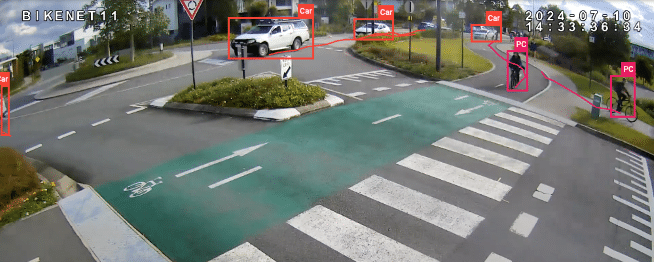
A major Queensland study using Bicycle Network's Artificial Intelligence Road Surveys (AIRS) data has shown that separated bike infrastructure in new housing developments is heavily used across demographics — supporting a case for its widespread inclusion.
The study was undertaken through the Transport Academic Partnership between the University of Queensland and the Queensland Department of Transport and Main Roads.
It aimed to understand how separated cycle tracks perform within new developments, how they shape users' mobility choices and what planning and design factors influence their long-term success.
The study assessed the use of separated bike infrastructure in housing developments through intercept surveys, stakeholder workshops and behavioural observation study.
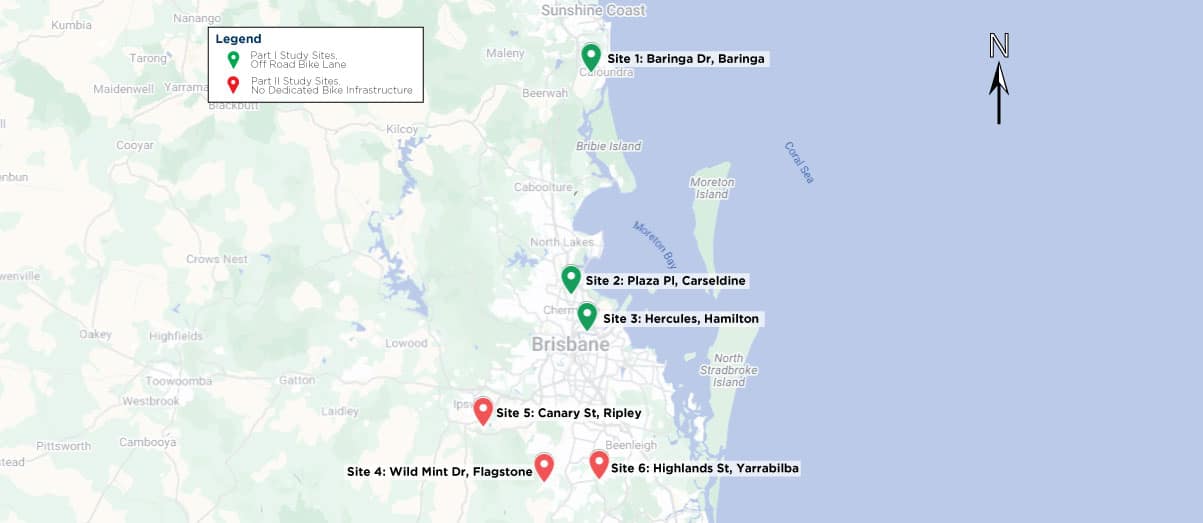
Bicycle Network's AIRS cameras were particularly used for behavioural observation study, capturing footage across six sites in southeast Queensland.
Three of the sites featured separated cycling tracks and three did not.
AIRS cameras captured how many riders used the sites, in what volumes, at what times, and at what speeds, as well as rider demographics (gender, age, what they were riding) and helmet compliance.
They also recorded vehicles volumes, speeds and turning movements, as well as conflicts between vehicles and other road users.
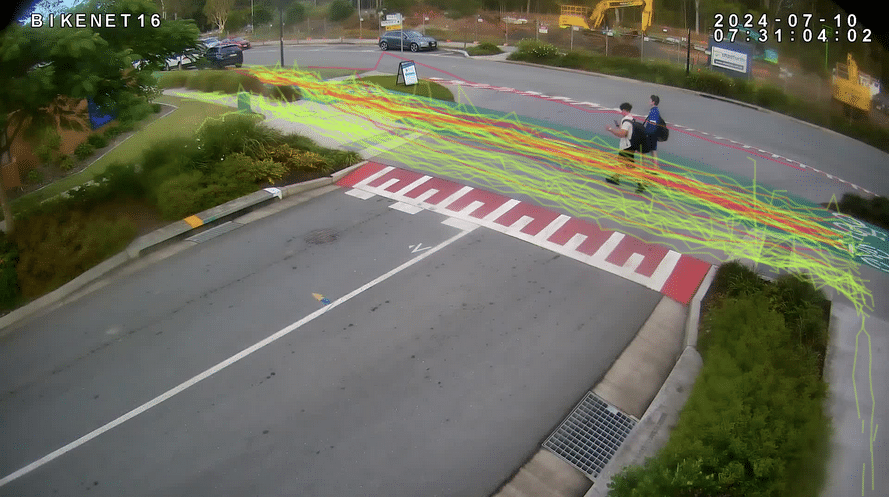
Across all three comparisons, sites with separated cycling tracks consistently recorded higher overall volumes of active travellers, a more diverse mix of bikes, e-bikes and other e-mobility devices, and a stronger representation of women and children.
The study found that the presence of separated bike infrastructure encouraged active travel.
The researchers stated: "Overall, the AIRS analysis confirms that providing continuous, safe, and separated cycling networks is a key enabler of active travel.
"It encourages uptake across a broader demographic, reduces reliance on private vehicles, and integrates cycling into both local and regional mobility patterns.
"For councils and planners, the findings underline that investment in separated cycling tracks yields measurable benefits not only in safety and comfort but also in equity and accessibility."
Lead researcher Dr Dorina Pojani added: "It is encouraging that these effects are emerging in more suburban contexts.
"One can only imagine the scale of additional benefits that could be realised with well-designed micromobility infrastructure in denser urban environments, where latent demand is likely to be far greater."
The full report is publicly available here.
Looking for accurate and informative transport data? Contact us at bikefutures@bicyclenetwork.com.au to find out how AIRS can suit your needs, or visit our website.
Or become our friend and subscribe to receive our fortnightly newsletter.