

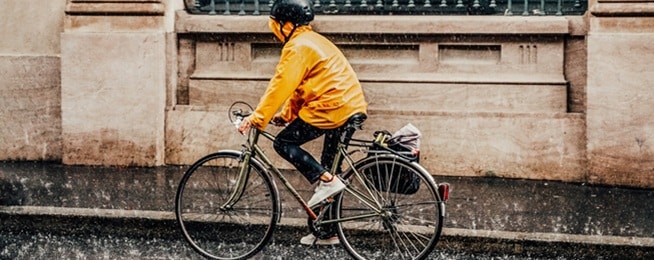
As the rain and frosts settle over the state, there’s no need to put your bike away, just be prepared to ride a little differently.
Slow down!
Frost and rain can create hazardous riding conditions if you brake quickly. What is a fine pace in the dry may be too fast for you to brake in time in the wet.
Just like driving a car, you should be slowing down on frosty mornings and evenings where ice may form on roads and cause tyres to slip, especially so on steeper and windy sections where the road camber can further complicate balance.
When it rains the mix of oil and water on road surfaces causes slick conditions and this is worse if it hasn’t rained for a while as oil can build up and create even more danger.
Reflections from water on the road can transform the surface appearance, hiding imperfections and hazards like broken glass. Careful, slower riding can ensure you don’t accidentally hit a pothole or puncture a tyre.
Rain can also affect visibility so use a cycling cap under your helmet or choose a helmet with a visor.
And last, rain can transform painted road markings, leaves and metal utility covers into slip hazards, so avoid or slow.
Layering and waterproofing
Waterproof jackets and overpants help protect clothes so you don’t arrive to your destination in a dripping mess, but be aware these can get hot quickly so dress accordingly underneath.
Waterproofing shoes are trickier but there are options – goretex-lined running/walking shoes are good up to a point, waterproof shoe covers, and some people just pull on a pair of gumboots.
“Buffs” are now a common accessory for cycling and running to help keep ears and necks warm without having to go full balaclava. Some helmets also come with ear covers.
Cycling gloves come in waterproof and windproof versions, a combination of both will keep your hands warm and dry.
Bringing along a spare change of socks at the minimum or full set of clothes if you can will help ease rain anxiety.
Backpack and pannier covers are essential and there are also waterproof panniers where you don’t have to worry about the coves.
Light up
You must have a white light on the front of your bike and red light on the back that are visible from at least 200 metres away and these must be on during periods of poor visibility. Flashing lights help drivers identify riders and some lights are now coming with downlighting so the bike is also illuminated to improve visibility.
Reflective jackets or highlighting can help make you more visible in the dark and rain, as can accessories like reflective ankle cuffs.
Mudguards are an important accessory to limit the spray from roads hitting your back and front.
Put on some tyres with deeper tread for the wetter months and consider lowering your normal tyre pressure to improve contact with the road.
Main image: Benjamin Chambon