

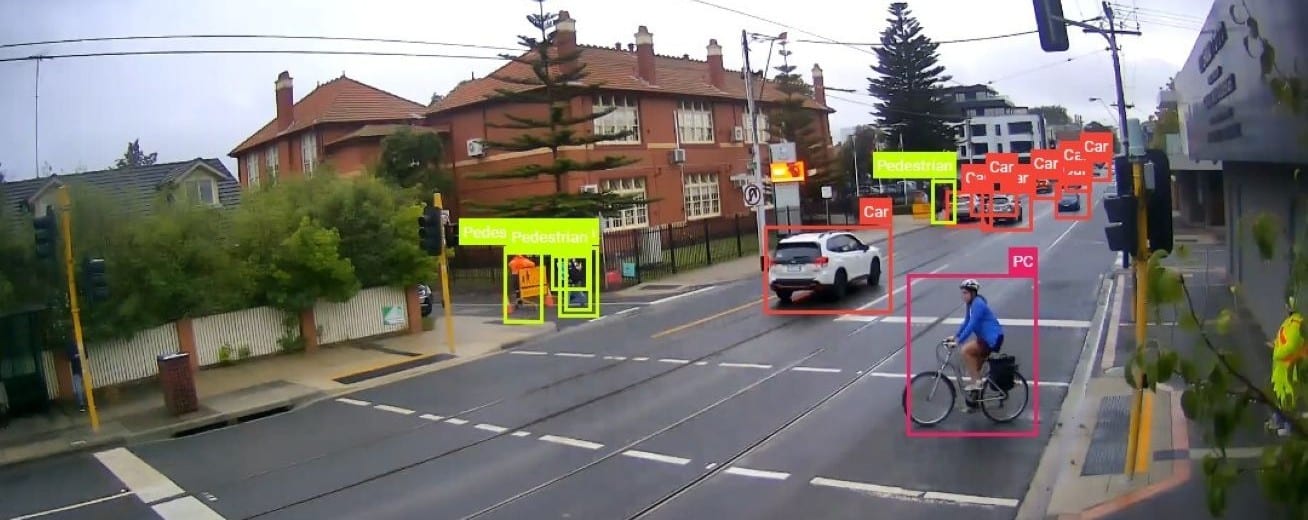
Data collected using Bicycle Network’s Artificial Intelligence Road Surveys (AIRS) cameras has shown that during the Open Streets program at Caulfield Junior College earlier this year, there was a significant drop off in car volumes and bike number spiked – marking the event as a great success for active transport.
Bicycle Network’s Open Streets program sees the streets surrounding schools closed to motor traffic at school drop-off and pick-up times.
The program took place at Caulfield Junior College on three Tuesdays in March.
It proved popular, with scores of kids riding, scooting, skipping and drawing with chalk in the car-free streets before and after school.
AIRS data now shows it wasn’t just an anecdotal success: there was a significant quantitative difference in how many cars there were on roads while the program was running.
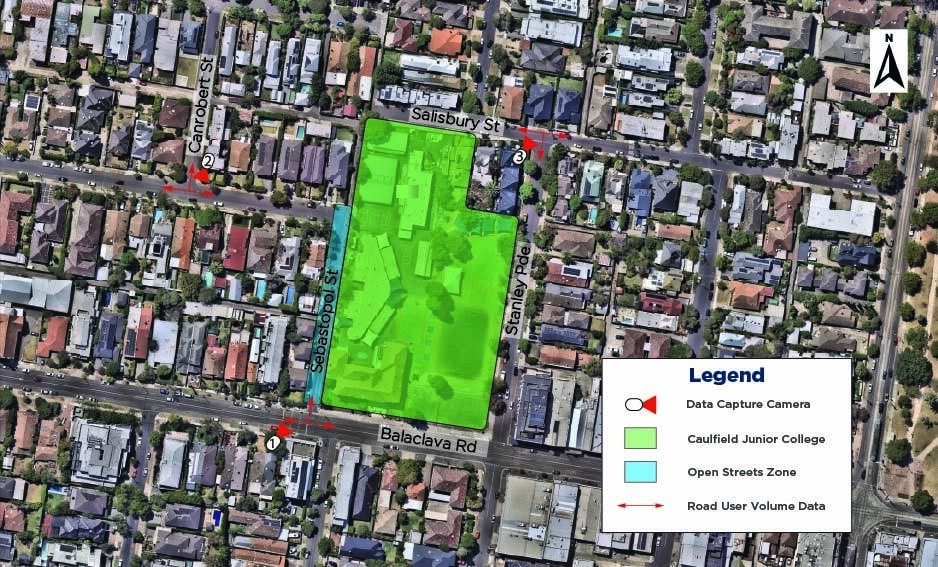
Bicycle Network compared the number of vehicles travelling in three different locations during Open Streets versus during usual school pick-up and drop-off hours: along Balaclava Road and in and out of Sebastopol Street, at Canrobert Street and Sebastopol Street, and at Stanley Parade and Salisbury Street.
All three sites saw a significant increase in bike rider movements, up 102%, 44% and 49% respectively.
All three sites also saw a bump in pedestrian movements (up 18%, 20% and 8%) and a decrease in vehicle volumes (down 7%, 10% and 28%).
Overall, it’s clear that the Open Streets initiative decreased the number of cars on roads around the school and boosted active transport amongst students and their parents and teachers.
More than 1250 ‘school streets’ have been set up around the world since 2019 to create safer and healthier journeys for students.
Open Streets is part of this global initiative here in Australia, with more activations planned.
Or become our friend and subscribe to receive our fortnightly newsletter.