
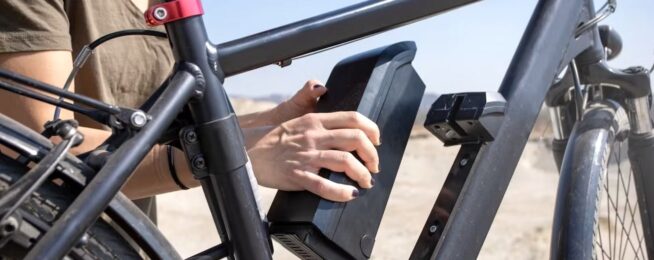
Victoria’s energy regulator has proposed stringent new controls on the batteries used in e-bikes by requiring them to be tested and certified before sale.
Energy Safe Victoria, which regulates a vast swathe of the energy sector from gas heaters to power lines to railway systems, plans to declare e-transport devices with lithium-ion batteries such as e-bikes and e-scooters “controlled electrical equipment” under the Electricity Safety Act.
It says that e-transport devices and their lithium-ion batteries must comply with electrical safety standards and be safe to be connected to an electricity supply to be supplied in Victoria, however, there is currently no requirement for independent pre-market testing or verification to ensure this is the case.
This leads to a greater risk of poorly made devices being supplied in Victoria.
The agency has issued a consultation paper outlining the proposal and is seeking feedback from manufacturers, suppliers, retailers, transport and safety experts, local government, community organisations and members of the public.
There are online information sessions on Wednesday 10 September, 12pm, and Tuesday 16 September, 12pm.
The move matches that undertaken by a similar regulatory agency in New South Wales. In New South Wales, about 1 in every 40 fires attended by Fire and Rescue New South Wales (FRNSW) involves a lithium-ion battery or battery device, and a quarter of those involved e-transport devices, mostly e-bikes.
The actions further complicate efforts to get e-bike regulation in Australia back on track.
Most of the e-bike fires have involved poor-quality or damaged products and are caused by battery thermal runaway where a battery overheats and catches fire, continuing to burn vigorously by producing its own oxygen.
Such fires are virtually unheard of in the quality products provided by the major bike brands.
Bicycle Network along with the rest of the bike sector has been pressing for re-introduction of the appropriate e-bike standard – AS 15194 or EN 15194 – so that all federal and state laws can be harmonised around a single regulation.
However, Energy Victoria has put a stick in the derailleur by claiming there are 'shortcomings' in the world’s best practice design standard for e-bikes, especially a claimed lack of battery testing.
Of course, if Australian energy regulators succeed in ensuring all e-bike batteries are tested to their standards, this could complicate international supply chains for the bike industry to such a degree that some of the best brands may decide to bypass Australia completely.
At least this consultation brings these issues into the public domain so that riders have a chance to state their case for simple, harmonised, strong regulation that ensures safety for consumers while encouraging the growth of a new socially and economically beneficial mode of transport.
Or become our friend and subscribe to receive our fortnightly newsletter.