
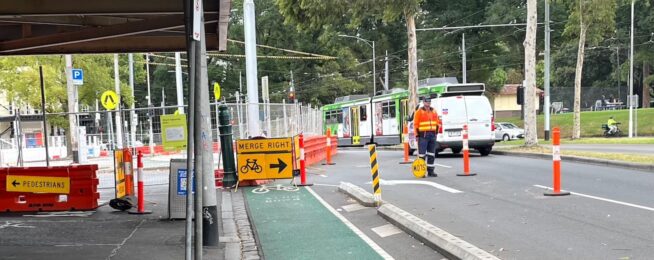
Melbourne’s inner councils will have $15 million more funding for bike projects each year following amendments to the Victorian Congestion Levy legislation.
When Parliament was considering changes to the levy rate and geographical coverage this week, the Greens proposed further changes that would modify the way the funds were disbursed.
Currently most of the money disappears into the state government coffers, with only the City of Melbourne receiving a token share.
Amendments adopted in Parliament this week will in the future allocate a proportion of funds raised to each of the five inner councils for spending specifically on active transport projects.
The amount will total $150 million over the next decade, a sum that will make a substantial addition to the bike network and pedestrian facilities in inner Melbourne.
The Cities of Melbourne, Stonnington, Port Philip, Merri-Bek and Yarra are in line for the cash boost as they contain areas where the levy on commercial car parking is struck.
Bicycle Network CEO Alison McCormack welcomed the decision by Parliament.
“We have long argued for this change to be made,” she said.
“A levy on commercial parking to reduce congestion-creating car trips was always a sensible idea, but the funds raised went who-knows-where.
"Now Melburnians can be assured that at least some of the money will be put to uses that will further reduce the need for car trips in the inner city, such as better bike and pedestrian infrastructure.”
Leader of the Victorian Greens, Ellen Sandell, said: “You should be able to ride, walk or catch public transport to work safely – but we need better infrastructure to make active transport a safe and accessible choice.
“Thriving cities across the world like Singapore and London are prioritising reducing car use and making riding and walking safer and more accessible. Here in Melbourne, we should be proud to be doing the same."
Victorian Greens active transport spokesperson, Tim Read, said: “More bike lanes and safer, more accessible footpaths means fewer cars on the road, less pollution and healthier people."
While this advance will be greatly beneficial, the riding community will need to stand watch to ensure that the funding is indeed net additional funding and not merely used to reduce bike funding from other sources.
Or become our friend and subscribe to receive our fortnightly newsletter.