

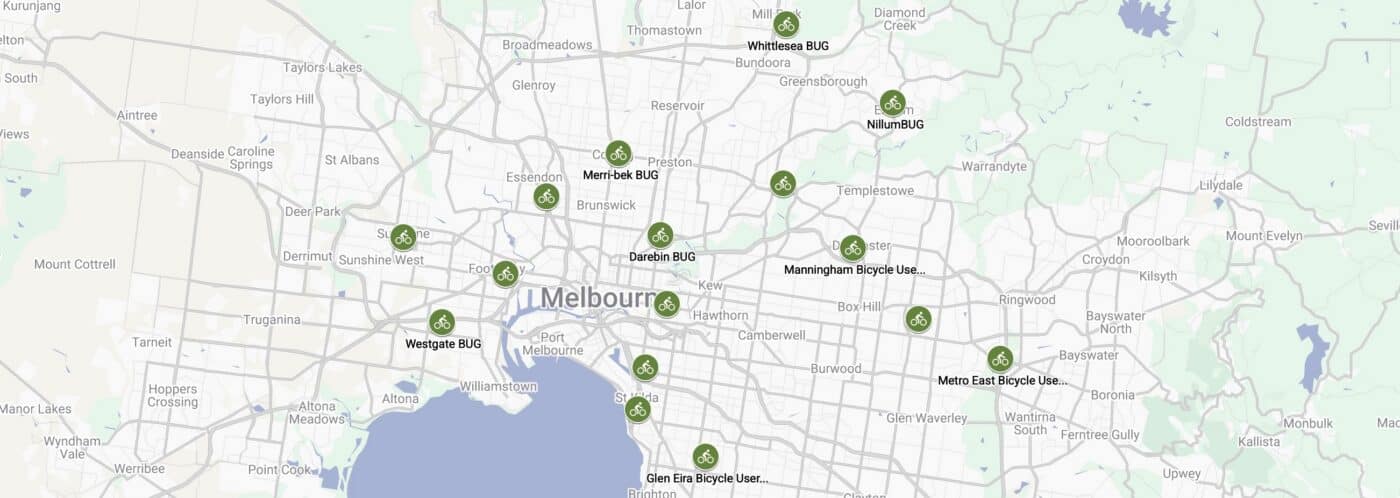
Bicycle User Groups, or BUGs as they've become known, have a long and fascinating history in Victoria and across Australia.
In 1990, Bicycle Victoria first introduced the BUG movement. It all began as small local groups of bike enthusiasts who loved cycling and spending time with like-minded others.
The concept proved popular and quickly evolved to take on a life of its own, and is still driving change nearly 40 years later.
“There were two rules for a BUG,” explained Paul McKay, former General Manager of what was then Bicycle Victoria, “rule number one was it had to be about bikes and rule number two was it had to be fun. Other than that, we didn’t care what it was.”
By the 1990s, Bicycle Victoria (BV) had already seen many changes, evolving from a volunteer advocacy organisation (formerly known as the Bicycle Institute of Victoria) into one with paid staff that also ran rides and events.
With a steady income provided by their very popular rides, Bicycle Victoria was employing staff for several roles, including the ongoing engagement with the state government to make the case for increasing cyclist safety.
By this stage, it was becoming clear that major improvements could be made to provide safe riding environments through local government. But with over 200 councils across Victoria (this was prior to the Kennett-era council amalgamations), it was also clear that no matter how well BV was doing, they would never have the resources to employ enough staff to liaise with every council in the state.
Improving infrastructure
Founding member Charlie Farren and members Ron Shepherd and Peter Innocent were also residents of the City of Prahran and organised together to advocate to the Prahran Council for improved conditions for riders.
It occurred to Bicycle Victoria staff that many more of their members would be well placed to do the same. Local residents had the local knowledge about what was needed to make riding safer and could be the best placed to lobby local government officers and councillors. And so the idea for Bicycle User Groups was born.

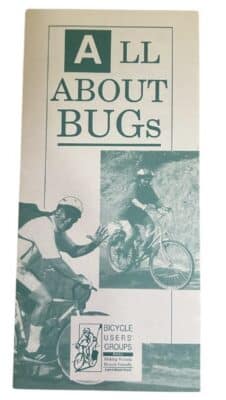
A 35-page BUG Kit was created, full of information on how BUGs could advocate to local councils, and a staff member was assigned to support those interested in creating a BUG in their local area.
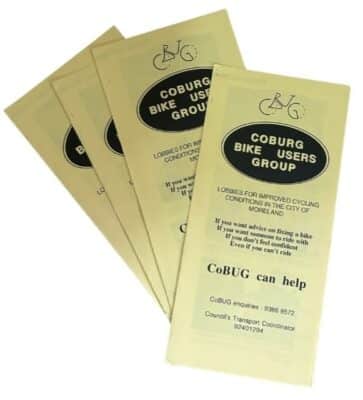
In February of 1990 a meeting was held at BV’s offices where members heard about local advocacy, lobbying and what a BUG could be, soon followed by letters to BV members about opportunities to start BUGs in their local area. Coburg BUG was reportedly the first BUG created, the first of almost thirty created that year.
Over the next few years, BUGs were formed in council areas across Victoria as well as around specific workplaces and organisations.
What do BUGs do?
But what do BUGs actually do? Like most community groups, a BUG’s direction is dictated by the interests of the volunteers in it at the time.
The rules, that they be about bikes and fun have left plenty of room for interpretation, and over the years we have seen BUGs who focus on running rides, doing free bike checks, writing endless submissions, taking local politicians for rides, teaching people to ride, taking endless photos of bollards, creating community bike sheds or bike kitchens, building their own bike paths or broadcasting radio shows.
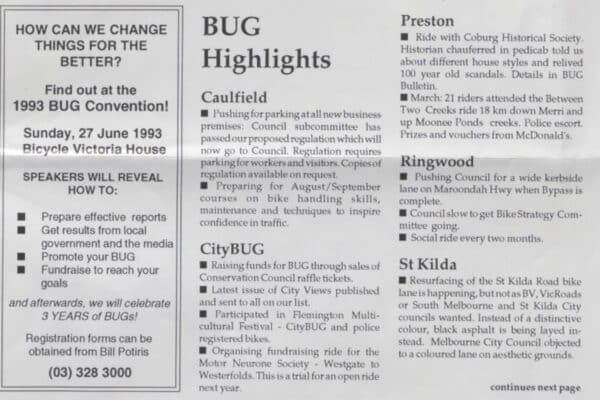
Early 1990 copies of the BV magazine document how Bicycle Victoria and BUGs campaigned together effectively on issues such as bicycle parking, and how they responded together to Vic Roads consultations.
BV’s continual growth saw considerable changes to the organisation over the 1990s.The autonomy BUGs had to ‘do what they want’ increasingly created tension within a rapidly professionalising BV organisation, and from the mid-1990s, BUGs have been independent organisations.
Like many local community groups, BUGs have fostered not just new bike links, improved bike parking, and bike budgets but also friendships that have endured sometimes across decades. The opportunity to find your people and work together towards common goals has built not only bike paths but also community.
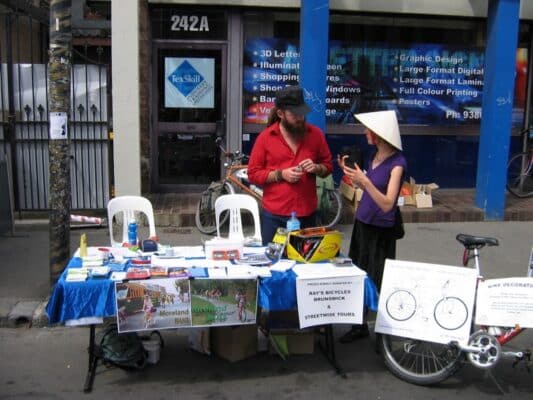
Older BUGs have folded, and new ones have formed; some BUGs aren’t even called ‘BUGs’ anymore, adopting names that reflect a wider interest in general active transport or a more direct reference to the bicycle.
More recently, BUGs and Bicycle Network have again being working closely together, on campaigns like the recent City of Melbourne bike budget, and with significant effect.
Joan Baez put it well when she said, “Action is the antidote to despair.”
Looking at today’s BUGs, we can see that action is being channelled through the two guiding principles that still inform so much BUG work today: It has (in some way) to be about bikes, and it has to be fun.
Have you considered joining a BUG? Check out Bicycle Network’s website to find your local BUG and if you can’t find one in your local area, why not start one?